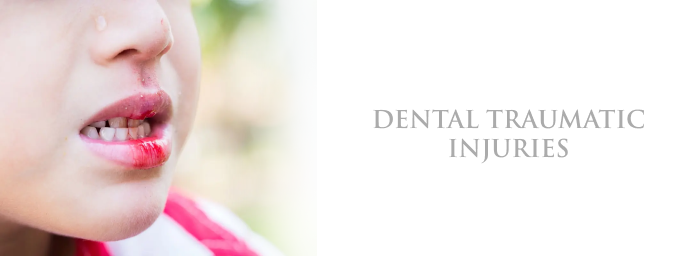
Dental Traumatic Injuries
How to manage them?
Here's a blueprint on how to handle a dental trauma (fall, blow, accidents or sports injury).
Various types of injuries occur after trauma to the gums, teeth, jaws and supporting structures. These injuries can be mild or severe and needs immediate action.
DON'T WORRY AND IGNORE! It's an emergency'. VISIT US IMMEDIATELY. Act faster, to save your teeth.
Types of trauma
| Hard Tissue Injuries | Soft Tissue Injuries | Periodontal Injuries |
|---|---|---|
|
Crown fractures : Breakage in the visible cap portion of teeth Enamel fractures : Cracks or breakages in the outer layer of teeth. Enamel - dentin fractures : Cracks or breakages extending to the second (dentin) layer of teeth. Root fractures : Cracks or breakage extending to the root portion. Alveolar fractures : Breakage extends to the bone supporting the teeth. |
Injuries to gums, lips, and soft tissues in your mouth |
Concussion : The teeth ligament(pdl) is involved and teeth are not displaced Subluxation : Loosening of teeth in the socket partially Luxation : The teeth is displaced either inside, outside or sideways. Avulsion : Teeth are knocked out completely |
What are the symptoms?
- Toothache or pain
- Teeth discoloration
- Swelling
- Bleeding gums
- Loose teeth
- Difficulty opening the mouth
FIRST AID
Know everything to act instantly. Faster action is wiser.
Consequences of trauma : Do not ignore the dental check-up if pain is not there after a trauma. The trauma can make you vulnerable to several oral health issues. Many of them experience psychological problems too. The possible consequences are
- Cavities
- Tooth Abscess
- Tooth discoloration and loss
- Pain
- Chewing difficulties
- Speech problems
- Changes in appearance
- Self-esteem issues
How is it diagnosed?
A clinical examination is done. X-rays or CBCT scans, if needed, are taken to diagnose and plan the treatment.
Patients with protruded teeth are at increased risk.
Treatment options
Various treatment options are available and depend on the type of injury.
- Dental fillings: if the injury is minor, dental fillings are done to cover up the tooth cracks.
- Root canal treatment(RCT). If the injury involves the tooth nerve or pulp, RCT is indicated. Sometimes, tooth discoloration may be seen after several months or years, then RCT is suggested.
- Splinting or restabilization: In cases where the tooth is displaced, splinting is necessary to stabilize and prevent the teeth moving apart.
- Replantation: The knocked-out teeth are replanted into the socket immediately within 30 mins to aid re-attachment.
- Extraction: If the injury is beyond repair, the involved teeth may need to be extracted and replaced later.
- Teeth replacement: Teeth lost by trauma need to be replaced by dentures, dental bridges or implants.
Our team of dentists will examine and suggest what is right for you.
These life-saving tips may help to prevent a dental trauma:
- Wear a mouthgard while playing sports
- Wear a face sheild
- Wear a seatbelt while driving
- Orthodontic treatment or braces help to reduce the risk oif dental trauma in proclined teeth cases. Visit us to know more.
- No chewing ice, no nail biting